
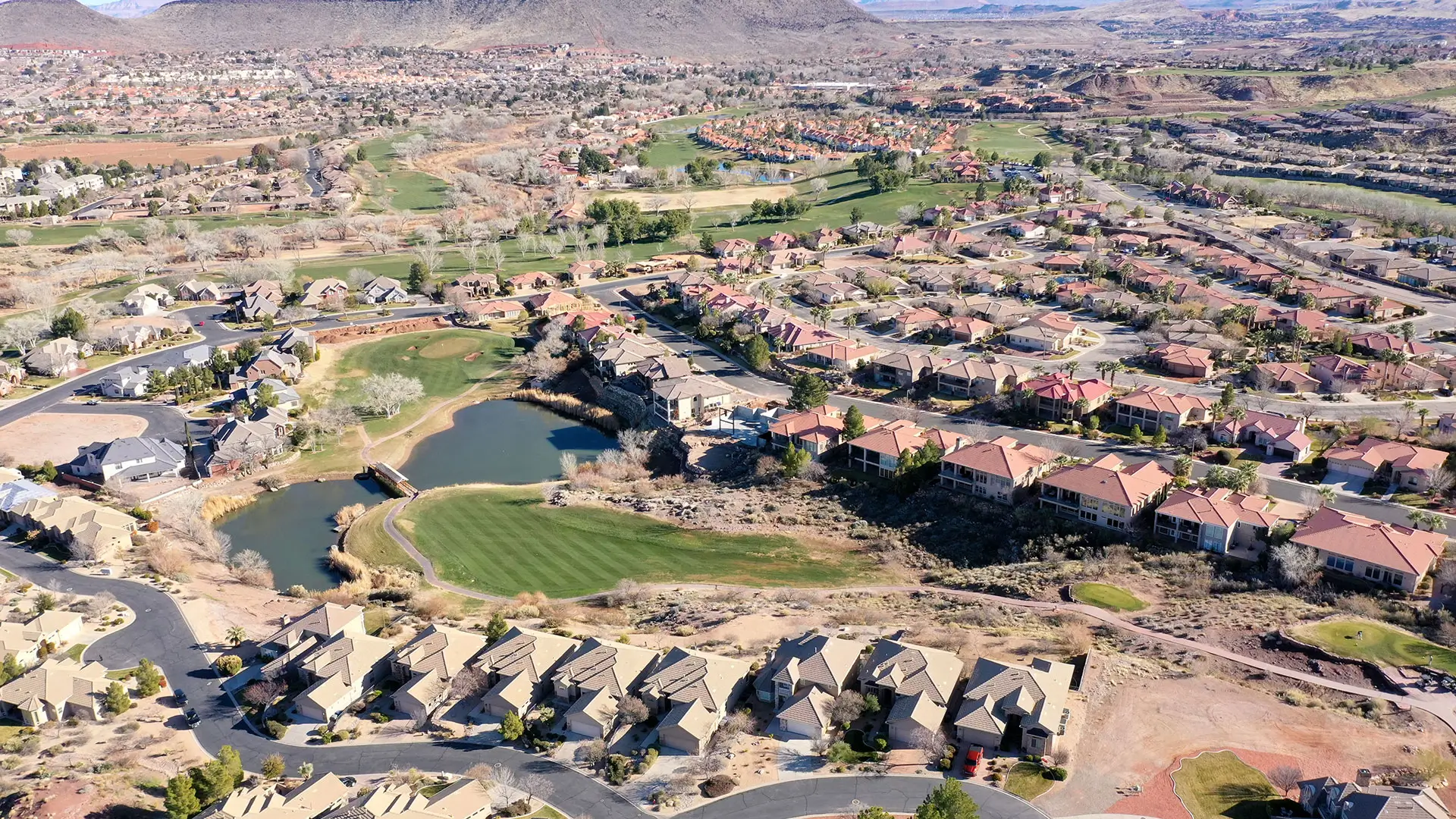
Pros and Cons of Living in St. George Utah
Pros and cons of moving to St. George, Utah. If you're looking at moving to St. George, you're going to want to know what's good about living in St. George and what's bad about Saint George Utah.
Pros and cons of moving to St. George, Utah. If you're looking at moving to St. George, you're going to want to know what’s good about living in St. George and what’s bad about Saint George Utah.
Related Articles:
St. George vs. Hurricane — which city is the better fit?
10 things to consider before moving to St. George
St. George Utah weather guide
Pros of Living in St. George Utah
The weather is awesome in St. George. Yes, it does get hot during the summer, and it gets a little bit cool over the winter, but for the most part, the weather is very manageable. For a lot of months out of the year you can spend time outside and not have to worry about it being too cool or too hot.
In the winter, you're typically looking at temperatures between 30, 40, and 50 degrees. It's going to be roughly high thirties overnight, forties in the morning and at night, and then fifties during the day. So if you want to go out and do stuff, 50 degrees is still manageable. You could still go out and go golfing in that temperature, or you could go out and go hiking. You could do all these activities through the winter months.
St George Utah gets amazing weather during the spring and fall months as well. This is the perfect time to visit St. George. You've got February, March, April, May, and then looking on the back half of the year, you've got September and October, even November where the weather is still very manageable and very nice. That's the time you want to be outside because it's very comfortable for us. So the weather here in St. George is absolutely phenomenal.
The Airport SGU
The airport is nearby. It's really easy to get to the St. George Regional Airport and it's pretty easy to get a flight from St. George to Las Vegas, to Phoenix or up to Salt Lake City, and then catch your international flight out of one of those airports. It's easy to get that flight, it's relatively short and it's pretty easy to get around. If you're going to be traveling on a regular basis, living somewhat closer to the airport might be more beneficial, but no matter where you live, even if you're in the other side of town, you're over in Santa Clara or Ivins, I mean, you're less than an hour drive to the airport.
Transportation
Transportation, it's really easy to get around. Let's say we're not talking about flying, but instead you want to drive somewhere. Well, it's only a six hour drive to get to Southern California if you want to go to the beach, you want to go to Disneyland. You're looking at roughly six to seven hours, depending on traffic. Beyond that, you're about four hours to Salt Lake. You're roughly two hours to Las Vegas and you're roughly six hours to get to Phoenix, Arizona.
If you’re relocating from larger metro areas such as Bay Area, California or Phoenix, Arizona, it’s best to work with a reputable moving company, such as Ontrack Moving, that’s going to be familiar with that region. Just make sure they cover your desired destination and are well-versed in things like move-in rules, access, and parking regulations.
Outdoors
St. George is the access to the outdoors and especially the national parks in the area. If you want unprecedented access to national parks, if you want to go visit these places over a weekend or even in one day, this is something that's definitely doable from the St. George area. To give you an idea of how close these state and national parks are, let me read off this list for you.
To get to Sand Hollow Reservoir you're only a 30 minute drive from St. George. To get to the Grand Canyon, four and a half hours. To get the Grand Staircase-Escalante, two hours. To Zion National Park, one hour. Three and a half hours to Capitol Reef and five hours to Canyonland. It's literally a couple hours to four or five hours to get to all of these different state and national parks. That's really unprecedented access and I don't know many other places where you can get access to that many national parks in just one place in that short amount of time. The Bureau of Land Management's St. George Field Office manages over 600,000 acres of public lands in the area, providing additional recreational opportunities beyond the national parks.
Low Crime Rate
There's an extremely low crime rate in St. George, especially compared to other parts of the country. Now you can't avoid crime altogether. Of course, there's still going to be crime. Whenever you get a large amount of people in one area, there's always going to be crime for that area. The good thing about St. George and even just Utah in general, is that we typically have a pretty low violent crime rate, which means, those are the really gruesome crimes that people are doing. Typically, it's more property crime. It's going to be graffiti, or it's going to be trespassing, or it's going to be somebody breaking into your car. Not things that you want to have happen, but it's still better than the alternative violent crimes. So crime is going to be very low, especially if you're coming from the West Coast, the East Coast, even the South. I mean, St. George has extremely low crime and that's a huge plus.
St George Community
St. George is very community focused. St. George is a very family friendly place and people really get along there, and they're generally pretty nice. This is something I hear all the time. When people come and visit Utah, they just always comment to me, "I can't believe that people say hi to you when you're at the grocery store or you pass each other on the sidewalk." For me growing up here, that's kind of just a normal thing. I don't really understand what the big deal about it is, but St. George and even Utah in general is very community focused, very friendly and there's a lot of people here. It's very family focused as well. Lots of kids. It's just a great place to raise a family and grow up. So there's nothing really to complain about there. If that's what you're looking for, you're definitely going to find that here. The City of St. George offers numerous community programs and family-friendly events throughout the year.
Strong Economy
The economy keeps adding employers and the population is growing fast. Washington County added roughly 25% in the 2010-2020 census and the Kem C. Gardner Policy Institute projects the county will pass 290,000 by 2030. The biggest local employers are Intermountain Health's St. George Regional Hospital (~3,000+ employees), SkyWest Airlines (headquartered here, ~1,000 employees), Washington County School District, and Utah Tech University. The 175-acre Tech Ridge business park next to the airport is bringing in tech tenants — Zonos opened its campus there in 2024 — and is the main catalyst for higher-paying job growth over the next decade.
Cons about living in St. George Utah
If you're looking at moving to an area, you have to know that no area is going to be completely perfect. There's going to be some downsides and St. George is no different.
Very hot weather
St. George is going to get very hot during the summer. During the summer from about noon on it's almost impossible to be outside because it's just too hot. This only happens for a few weeks out of the year when St George gets heat waves with over 100+ degrees for weeks a time.
Yes, it is a dry heat. So it's a little bit more manageable. We don't have the humidity that you get on the coastal cities or the other areas of the country, but here in St. George, it just gets so hot that it's almost impossible to be outside. So you do get outdoor recreation and access throughout most of the year but from let's say the end of May through the beginning of September during the day, it's almost impossible to be outside doing anything. So that's the time where you're going to be sitting in the pool or staying inside cooling off in the A/C. For more information about St. George's weather patterns, see our guide on understanding the weather in St. George Utah.
Not Very Many High Paying Jobs
St. George has fewer higher paying jobs. Just like we talked about that as a benefit, there's a strong economy here in St. George, we're also seeing that there's not a ton of high paying jobs. Most of the people coming in are working remote and especially if they're earning a high income, it's because they're working at another company that's situated in a different city or a different state. So there's not a ton of high paying jobs, unless you're a doctor, or a dentist or an attorney. Of course those people are still going to have a very high income potential, but for most people out there, there's just not a lot of job opportunities just yet, but it is growing. For current employment data and opportunities in the area, visit the Utah Department of Workforce Services - Washington County.
So if you already have a job, if you're working remote, then that may not be a concern for you. Or if you've already got money, you're not concerned about the money necessarily, maybe you're retired or something like that. Then again, this might not be a negative for you. But if you're looking to move the area and you're saying hey, I want to have an opportunity for career advancement, it might be a little bit more difficult in St. George than it would be in other areas. So that's just something to kind of keep in mind when it comes to making that move here.
Lack of Shopping
St. George has solid mid-market shopping — Red Cliffs Mall and the Promenade at Red Cliffs cover most of the national brands — but the true luxury tier (Nordstrom, high-end restaurants, luxury car dealerships) still requires a trip to Las Vegas (2 hours south) or Salt Lake City (4 hours north). That said, the picture is shifting: Black Desert Resort in Ivins hosted a PGA Tour event in 2024 and is bringing higher-end dining and hospitality to the area, and Desert Color continues to draw destination restaurants to its lagoon-anchored town center. Expect the upscale gap to narrow over the next 5-10 years, not decades.
High Housing Cost
Cost of living is generally really low, but when it comes to housing, housing is quite expensive, and that's kind of true for Utah in general. We do have low state income taxes and property taxes are very low as well, but this means that prices are relatively high compared to a lot of other areas in the country. For detailed information about the cost of living in St. George, check out our guide on the cost of living in St. George Utah.
Now, if you're from New York, you're from California, you're from these other expensive areas, then you might look at St. George real estate and say, man, that's a steal. I can get that much house for $700,000 or a million dollars? But if you're coming from Oklahoma, or Kentucky, or Florida, you might be looking at St. George real estate and saying, that is insane. I can't believe people are paying that much for the housing there. So the cost of living for housing is definitely higher. But if you're looking at buying a house, you should expect to pay a little bit more on a relative basis compared to how far your money would stretch if you were looking somewhere else.
No nightlife activities
Most people might not think this is even a negative, but I thought it was worth mentioning here. The thing about Utah and St. George specifically is that people really live here for the outdoor access. If you want to be going to the national parks, if you want to go hiking, you want to go boating, you want to go outside and enjoy nature, that's why people live here. So if you're looking for a nightlife or city life, you're not really going to find that in St. George. So for some people that might be a downside. Maybe you're the type of person who wants to go downtown and hit the bars and whatever, and do that type of thing. Well, you're not really going to find that in St. George.
Is St. George right for you?
For families, retirees, and remote workers, the math typically pencils. The climate, low crime, outdoor access, and tax friendliness offset the summer heat and the smaller job market. For young single professionals chasing a city-life nightlife scene or a tech-startup career path, Salt Lake City or out-of-state usually makes more sense.
Real-estate next steps
- St. George market stats — current median sale, days on market, and sale-to-list ratio, refreshed monthly.
- St. George cost of living breakdown — line items so the relative-to-California savings turn into actual dollars.
- Best areas around St. George to live — neighborhood-by-neighborhood guide (Bloomington, Sunriver, Stone Cliff, Entrada, Santa Clara, Ivins).
- Reach out to Best Utah Real Estate — our agents have walked Sunriver retirement homes, Stone Cliff luxury, Desert Color new-builds, and the older Bloomington / Bloomington Hills inventory.
Posted by Kristopher Larson
Frequently asked questions
Is St. George, Utah a good place to live in 2026?
What is the cost of living in St. George compared to other Utah cities?
How hot does it get in St. George in the summer?
What are the best neighborhoods in St. George to live in?
How is the job market in St. George?
Is St. George a good place to retire?
Keep reading
More from the blog
Timber Cladding vs Composite Cladding: Which Is Right for You?
How to Find the Best Cooling Comforter for Your Sleep

Signs Your Home May Have Termite Damage