
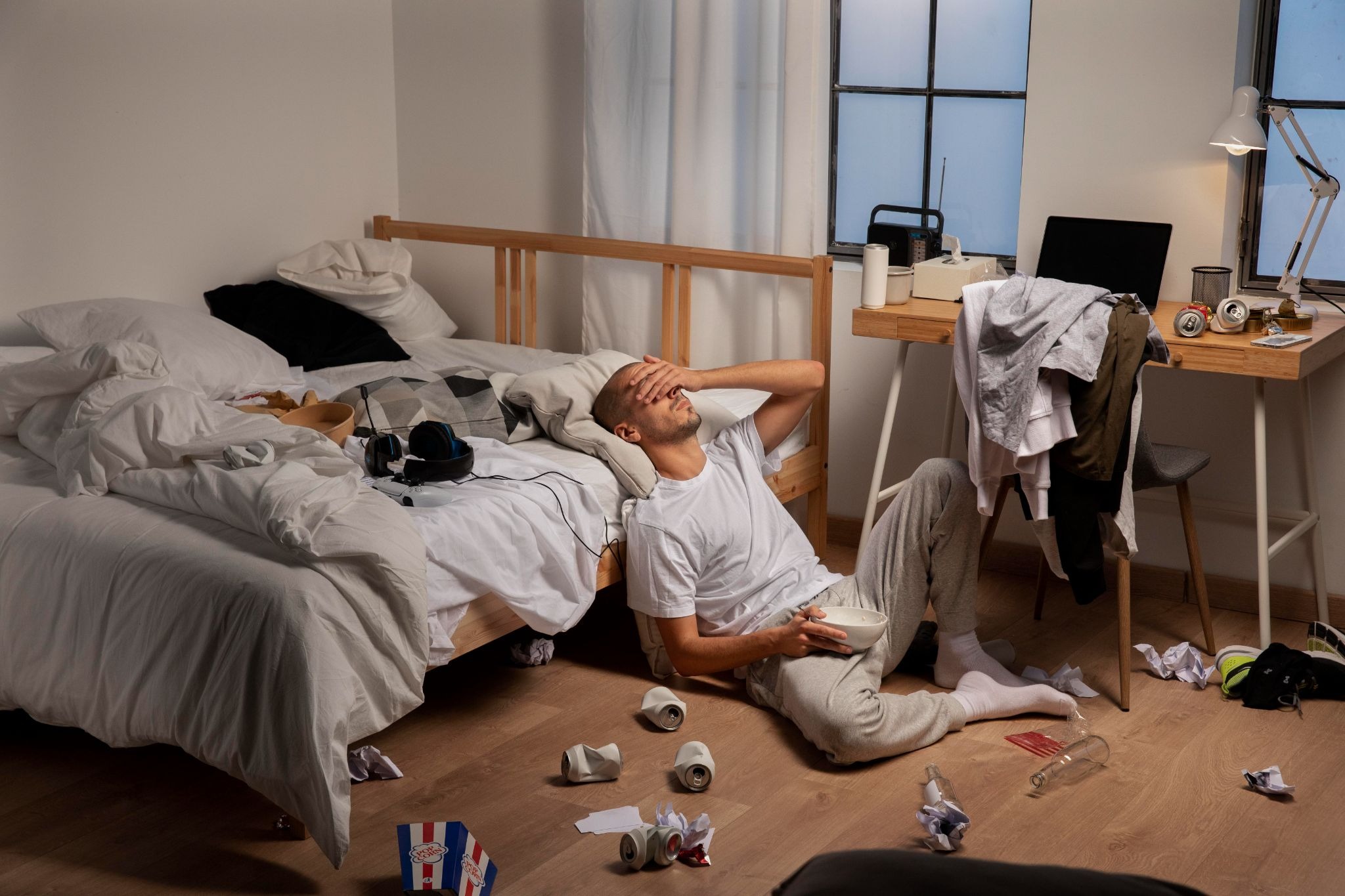
Why a Messy House Increases Stress Levels and How to Deal with It
In today’s fast-paced world, we’re constantly rushing somewhere or busy with something. For most people, home is a place where they can slow down, forget about the hustle and bustle for a moment, and simply enjoy the here and now.
In today’s fast-paced world, we’re constantly rushing somewhere or busy with something. For most people, home is a place where they can slow down, forget about the hustle and bustle for a moment, and simply enjoy the here and now. However, a problem for many busy people is a lack of time for effective cleaning. And we’re not talking about dust on shelves or floors that are not polished to shine; we’re talking about clothes that weren’t put away in time and have suddenly piled up, or scattered children’s toys that often aren’t even worth picking up. Psychologists say that our brains sometimes react quite strongly to visual chaos, and even a small amount of clutter can create internal tension. In this article, we will explain why this happens and whether certain changes in interior design can actually help eliminate it.
The Emotional Connection Between Objects and a Person’s Psychological State
You probably have things you don’t use (and are unlikely to ever need), but you keep them carefully stored in a closet just in case. Logic tells us to throw them away, but something inside us won’t let us do it. It’s not just clutter - it’s an emotional burden we carry. Our brains are wired so that physical objects become powerful anchors for memory. Touching an old item instantly triggers the emotions, images, and smells associated with it.
No matter how big your home is, and homes come in all shapes and sizes (you can see for yourself on ForeclosureHub, if you have a lot of such things, they create emotional and visual clutter.
Studies show that clutter is directly linked to increased stress and anxiety, as well as a reduced ability to concentrate. Every unnecessary item is not only a physical burden, but also a cognitive one; it requires constant decision-making, draining mental energy.
How Clutter Gradually Increases Stress Levels in Everyday Life
A cluttered home isn’t just about things being out of place. It gradually increases stress levels, reduces concentration, and affects the emotional state, creating feelings of fatigue and irritation even for no obvious reason. When faced with clutter, your brain must constantly process and respond to every item in sight. This leads to constant and unintentional tension and impedes concentration and energy levels.
Clutter creates sensory chaos, which makes it much more difficult to rest, switch between tasks, and find peace at home. As clutter increases, so does stress and anxiety, leading to increased cortisol levels. In addition, visually crowded spaces constantly attract attention. This leads to mental fatigue, as well as failure to complete tasks and achieve goals.
What Interior Design Changes Help Create a More Peaceful and Cozy Atmosphere
Psychological research shows that the interior influences the emotional state much more than it might seem. If the space is overloaded with things, chaotic placement, or bright details, the brain constantly receives unnecessary visual signals. That is why organizing a space today is not only a matter of comfort but also an effective way to relieve stress.
The first thing that is important to mention is the variety of storage systems, that is closed shelves, drawers, organizers, etc. They significantly reduce visual noise and make the space “cleaner”. There is no need to be afraid to leave so-called “free zones” in the house, that is, surfaces, where there are no unnecessary objects. For example, an empty table or a neatly arranged shelf can be perceived as a quiet space. When a person is surrounded by order, it is much easier for them to concentrate and feel in control of their daily life.
Does Your Well-Being Change After Effectively Organizing Your Space?
An organized space is not only beautiful. It is, above all, comfortable, functional, and truly liberating. Things stop hiding in chaotic heaps and are where you expect them to be. A cozy and structured home reduces anxiety and even improves sleep. Many people think that organizing space is just about beautifully folded boxes. But in fact, the changes concern not only the appearance of the house. They affect lifestyle, habits, the emotional state, and even family relationships.
Beauty, symmetry, logic, and air - all these affect our emotional state. A cozy home pleases the eye, inspires, and gives the feeling “I feel good here”. The space begins to charge you with energy, rather than take it away.
Final Thoughts
As you can see, clutter in the house affects not only the appearance of the space but also the psychological state of a person. Constant visual chaos increases fatigue, tension, and anxiety, while a properly organized space creates an atmosphere of peace and comfort. Remember that even small changes in your habits and interior can make you more organized, reduce your stress levels, and turn your home into a place where it’s easy to restore energy and where you want to come back to after a hard day.
Keep reading
More from the blog
Timber Cladding vs Composite Cladding: Which Is Right for You?
How to Find the Best Cooling Comforter for Your Sleep

Signs Your Home May Have Termite Damage